



Asphalt Overlay vs. Full Replacement: Which Is Right for Your Parking Lot?
Eventually, all parking lots need to be repaired. As potholes deepen and cracks widen, the damage surpasses what a simple sealcoat can fix. At this stage, property owners and managers must answer the question: what type of repair is appropriate? Here, Earle American explains the difference between asphalt overlay and asphalt replacement, so you know which method works best for your commercial parking lot.
Key Takeaways
- Asphalt overlay involves milling the existing asphalt surface, applying a tack coat, and then laying fresh asphalt on top of the existing pavement.
- Full replacement requires excavating and removing the existing parking lot before reconstructing the pavement entirely from the base up.
- Asphalt overlay is a cost-effective solution for surface-level damage but cannot address underlying structural issues, whereas full replacement corrects underlying problems and provides a long-lasting surface, though it is more time-consuming and costly.
What Is Asphalt Overlay?
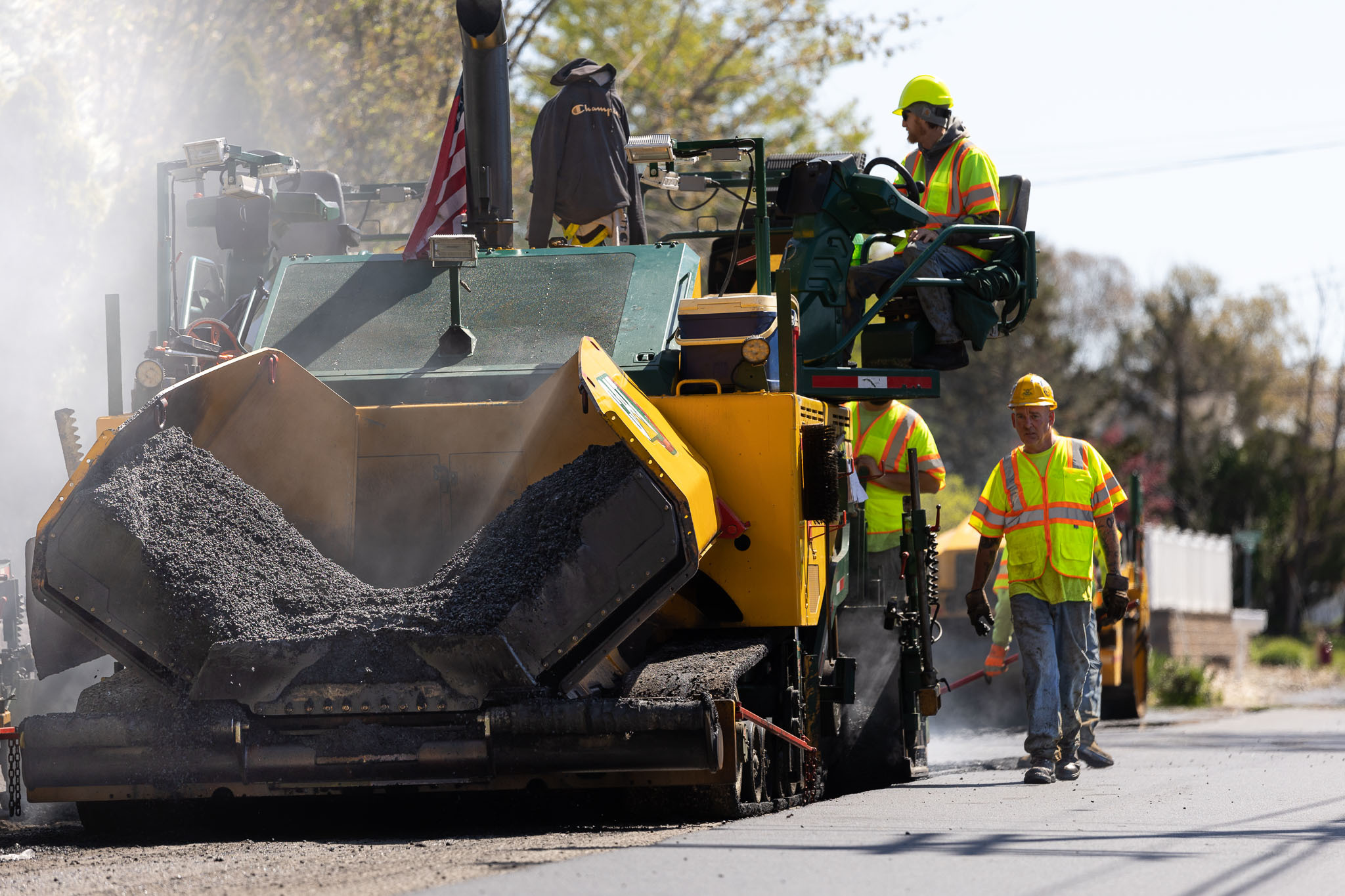
Asphalt overlay is the process of installing a new layer of asphalt over existing pavement to restore its surface. This is accomplished by first grinding down, a procedure called asphalt milling, the top 1.5 to 2 inches of old asphalt, creating an even base for the new layer. A tack coat, which is an adhesive emulsion, is then applied to bond the old and new asphalt. Finally, fresh asphalt is laid, smoothed, and compacted, resulting in a seamless and durable finish.
When Is Asphalt Overlay Appropriate?
Asphalt overlay is commonly recommended when the pavement’s underlying structure is still sound. It requires less material and labor than a full replacement, making it a cost-effective method for repairing damage that only affects the surface level. Because it’s quick, it also causes less disruption to traffic flow. Types of damage commonly addressed with asphalt overlay include:
- Cracks
- Shallow potholes
- Surface erosion
While it’s an effective method for repairing surface imperfections, asphalt overlay cannot fix structural issues. Base degradation, deep potholes, and other underlying problems will eventually show through the overlay. This means that overlays have a limited lifespan. Further repairs may be required sooner than expected, especially if the parking lot was severely damaged.
What Is Asphalt Replacement?
Full asphalt replacement, also called full-depth paving, requires removing all existing pavement and rebuilding from the ground up. The process involves milling machines and excavators to remove the old pavement. Next, the subgrade is fine-graded and compacted to ensure a solid foundation for the new asphalt. If soft spots are present, they are excavated and replaced. Finally, a base course of asphalt is installed, followed by a smooth surface course to complete the project.
When Is Full Replacement Appropriate?
Full replacement is recommended when the parking lot’s structural integrity is compromised. By rebuilding the pavement, contractors have the opportunity to address extensive or underlying damage. The result is a durable, long-lasting surface without any of the problems present with the old parking lot. Signs that full replacement may be necessary include:
- Alligator cracks
- Deep or extensive potholes
- Severe heaving
- Standing water
Although full replacement creates a longer-lasting surface, it’s also a more expensive and time-consuming process than overlaying. It comes with a large upfront investment and extended construction time while our crew excavates, rebuilds the base, and lays fresh asphalt. For this reason, full asphalt replacement is recommended only when we believe it is necessary to correct an underlying issue.
FAQs about Parking Lot Repair
When is an overlay a good option for a commercial parking lot?
An asphalt overlay is a good option for commercial parking lots that have surface-level damage. The overlay can repair cracks, shallow potholes, surface erosion, and other types of minor damage. However, it cannot address severe problems, especially issues with the parking lot structure.
What pavement issues require full-depth replacement?
Structural and foundation issues require full-depth replacement. Signs that your pavement has a structural issue include alligator cracks, heaving, and standing water.
How can a contractor determine the right repair method?
Earle American helps you choose the right repair method by performing a thorough inspection of your parking lot. We thoroughly evaluate the damage and apply our training and experience toward looking for signs of an underlying issue. Then, after discussing your needs and preferences, we recommend a solution that’s right for your parking lot, operations, and budget.
Plan Your Parking Lot Repair with Earle American
Choosing the right type of parking lot repair can help you save money while creating a long-lasting and attractive asphalt surface. Earle American offers both asphalt overlay and asphalt replacement, and our expertise can help you decide which repair method meets your business’s needs. With offices in Camden County and Passaic County, NJ, we serve all of New Jersey, southern New York State, southeastern PA, and northern Delaware. Contact us online or by phone to learn more or request a quote.
interested in asphalt paving?
get in touch with us
Are you looking for asphalt paving for your commercial property or industrial properties? Fill out the following form and we'll get back to you as soon as possible.