




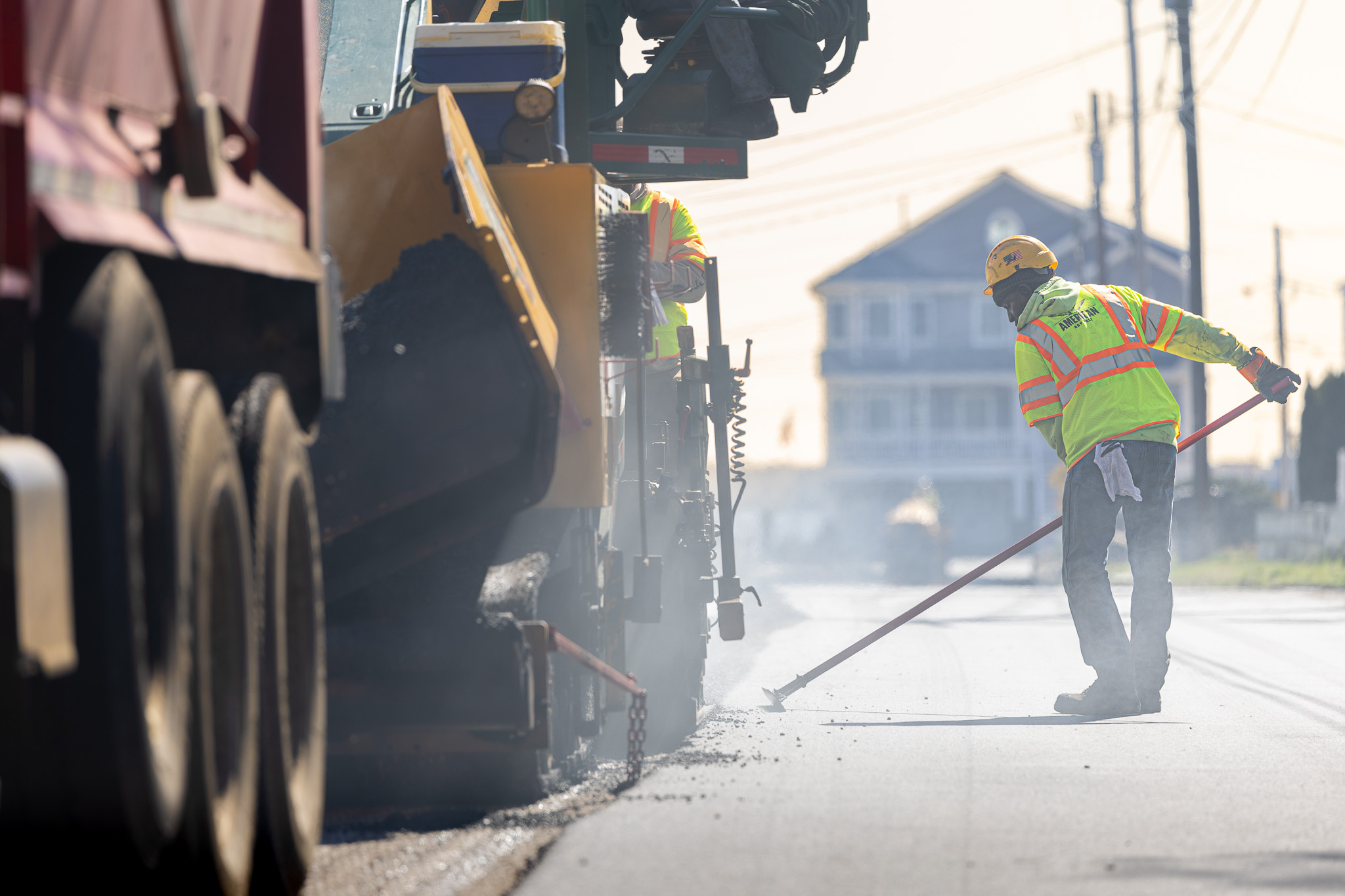
Municipal Asphalt Paving: What Townships Should Consider Before Road Repairs
Routine road repairs are essential for municipalities of all sizes. Well-maintained roads prevent accidents, are easier to plow, and keep your township beautiful for visitors and residents. Municipal paving projects come with unique considerations, and townships need to prepare accordingly before investing tax dollars in road repairs. Here, Earle American explains how to successfully plan a municipal asphalt paving project to minimize delays and achieve long-lasting results.
Key Takeaways
- Municipal roads are funded with tax dollars and must meet strict standards for pavement thickness, drainage, ADA compliance, and road maintenance.
- Start a municipal asphalt paving plan by evaluating and rating each road according to the severity of its damage. Use this rating to rank roads in order of priority.
- Proactively addressing drainage concerns helps municipalities extend the life of paved surfaces and avoid costly, repeated repairs.
- Break paving projects into phases to split payments, increase flexibility, and reduce traffic disruptions during ongoing road repairs.
What Makes Municipal Asphalt Paving Different?
The primary difference between private and municipal asphalt paving is who owns the road. When paving a private property, such as a commercial parking lot or access road, managers have flexibility in deciding their pavement thickness, drainage, and more. Municipal roads, meanwhile, are funded by tax dollars. That means they are subject to tight regulations, including:
- Pavement thickness: Because public roads accommodate high traffic volumes and heavy vehicles, such as buses, they must be built with durable, heavy-duty construction methods, including thicker pavement layers.
- Drainage systems: Public roads require robust drainage systems that are engineered to handle heavy rainfall and runoff.
- Maintenance schedules: Public roads follow strict government maintenance schedules based on municipal planning, budgets, and emergency needs.
All of these factors impact costs, scheduling, and other aspects of road repair. In order to avoid unexpected expenses and traffic disruptions, municipalities must take them into account while planning any asphalt paving project.
How Do You Make a Municipal Asphalt Paving Plan?
To ensure a smooth repair process, it’s important to plan ahead. Careful preparation will help you avoid delays and unexpected costs at every step of the road repair process. When developing a municipal asphalt paving plan, consider these key steps:
Rate Your Roads
Begin by evaluating and rating every road in the township on a scale from good to poor condition. This rating will decide each road’s repair needs and priority level. Roads that are in good condition only need preventive maintenance, such as crack sealing, and it may be possible to delay maintenance a little longer. Roads that are in very poor condition, meanwhile, will require urgent major repairs.
Address Drainage Issues
Water is asphalt’s worst enemy. Poor drainage will result in sunken roads, recurring potholes, flooding, and other expensive and dangerous issues. Before paving, consider whether the road’s current drainage system is sufficient. You may need to install new drainage or repair the existing system. These steps will ensure a longer-lasting road surface, helping you save on future repairs.
Understand Your Repair Needs
Next, determine what each section of road needs. Paving companies offer different levels of repair based on the extent of the damage and whether the foundation needs to be amended. The types of road repairs typically include:
- Sealcoating: A protective barrier is applied to asphalt surfaces to shield them from damage and extend their lifespan.
- Patching: This process targets and repairs cracks and potholes in localized areas of the road, restoring the surface and preventing further deterioration.
- Milling: The existing asphalt surface is ground down and replaced with a new layer to restore smoothness and structural integrity.
- Full-depth paving: This process involves excavating the existing road and fully reconstructing it from the foundation up, ensuring long-term durability and stability.
By understanding the road’s needs, townships can estimate the cost and budget more effectively.
Phase Your Project
Finally, divide the project into phases to make payments more manageable by spreading costs across multiple fiscal periods. Phasing also minimizes disruptions by allowing work on one section of road at a time, keeping other roads open for traffic. This approach ensures that residents can continue commuting and running errands without major interruptions, and emergency vehicles maintain access throughout the repair process.
FAQs about Municipal Asphalt Paving
What should townships consider before road repairs?
Townships should consider their budgets, the effectiveness of road drainage, the severity of the damage, and their maintenance schedules before planning road repairs.
What factors affect municipal paving schedules?
Municipal paving schedules are affected by budget and traffic demands. Municipalities should phase repairs to reduce the financial burden while avoiding major disruptions.
Why are drainage and base conditions important for road repairs?
Drainage and base conditions affect the longevity of your repair. With good drainage and a stable foundation, road surfaces can last for long periods with only preventive maintenance. If the foundation is compromised, however, then the road will experience recurring issues.
Hire a Road Repair Contractor You Trust
Choosing the right road repair contractor can mean the difference between an efficient repair that respects your needs and budget and one that leads to recurring issues that cost you more in the long run. Earle American has offices in Camden County and Passaic County, NJ, serving all of New Jersey, southern New York State, southeastern PA, and northern Delaware. Contact us online or by phone to learn more about our municipal asphalt paving services or to request a quote.
interested in asphalt paving?
get in touch with us
Are you looking for asphalt paving for your commercial property or industrial properties? Fill out the following form and we'll get back to you as soon as possible.