




How Drainage Problems Damage Commercial Asphalt Over Time
Water is one of your parking lot’s worst enemies. When water is allowed to sit for extended periods, it wreaks havoc on the asphalt and foundation, causing minor damage that can quickly spiral into a serious issue. Thankfully, you can avoid this looming threat by ensuring your parking lot has proper drainage solutions in place. Here, Earle American discusses how standing water and poor parking lot drainage can damage your asphalt, as well as commercial asphalt paving services designed to resolve parking lot drainage issues before they escalate.
Key Takeaways
- Standing water seeps into asphalt, often leading to surface erosion, cracks, potholes, and soft spots in the parking lot’s foundation.
- Signs of poor parking lot drainage include standing water after rainfall, severe or recurring potholes, alligator cracks, and sunken sections of concrete.
- Parking lot drainage solutions include strategic sloping, catch basins, and drainage channels to move water away from your asphalt.
What Does Poor Parking Lot Drainage Do?
Asphalt is a porous surface. That means that when stormwater collects on your parking lot, it doesn’t just sit on the surface. Instead, it slowly seeps into invisible cracks and joints in the pavement, causing them to expand. Over time, this seepage causes erosion that widens those cracks. The expansion leads to numerous types of damage, including:
- Cracks and potholes: Freeze-thaw cycles cause water in pavement cracks to repeatedly expand and contract, widening cracks and creating deep potholes.
- Surface erosion: Water that sits on the surface of a parking lot will erode the material, creating uneven spots and patches of broken-down asphalt.
- Structural weakness: Moisture seeping through the asphalt will pool beneath the subgrade, weakening the foundation and causing cracks and sinking.
If left unaddressed, this damage will eventually become a serious liability issue. Cracks and potholes are trip hazards that cause injury to visitors and clients, while uneven spots may damage vehicles or increase the risk of an accident. Injuries and property damage lead to costly liability payouts and reputational damage to your business.
What Are Signs of Poor Parking Lot Drainage?
Because many types of parking lot damage can appear similar, determining the root cause can be difficult. Are these cracks and potholes caused by drainage issues, or are they the result of normal wear and tear? To help identify drainage-related asphalt damage, watch for these telltale signs:
- Standing water after rainfall
- An alligator-like crack pattern
- Cracks and potholes that rapidly get worse
- Recurring potholes in the same locations
- Sunken or raised sections of pavement
If you suspect your parking lot has drainage problems, then schedule a professional evaluation from Earle American. Our experienced contractors will thoroughly inspect your site for signs of damage, such as crack patterns and low spots that may indicate foundation issues. Using their expertise, they’ll accurately identify the source of your parking lot damage and recommend the most effective solutions.
How Can You Improve Parking Lot Drainage?
Asphalt patching and sealcoating can repair minor damage and prevent further damage over time. If the problems are caused by standing water, however, then these are temporary solutions that will only delay more damage to come. Protecting your parking lot in the long term requires full-depth replacement and the implementation of one of several drainage improvement methods. Your options may include:
- Grading: By designing your parking lot with a sloped surface, you encourage water to flow off and toward the edges or into designated drainage channels.
- Drainage channels: Channels or gutters are installed around the edges of the parking lot to catch and divert water away from your asphalt.
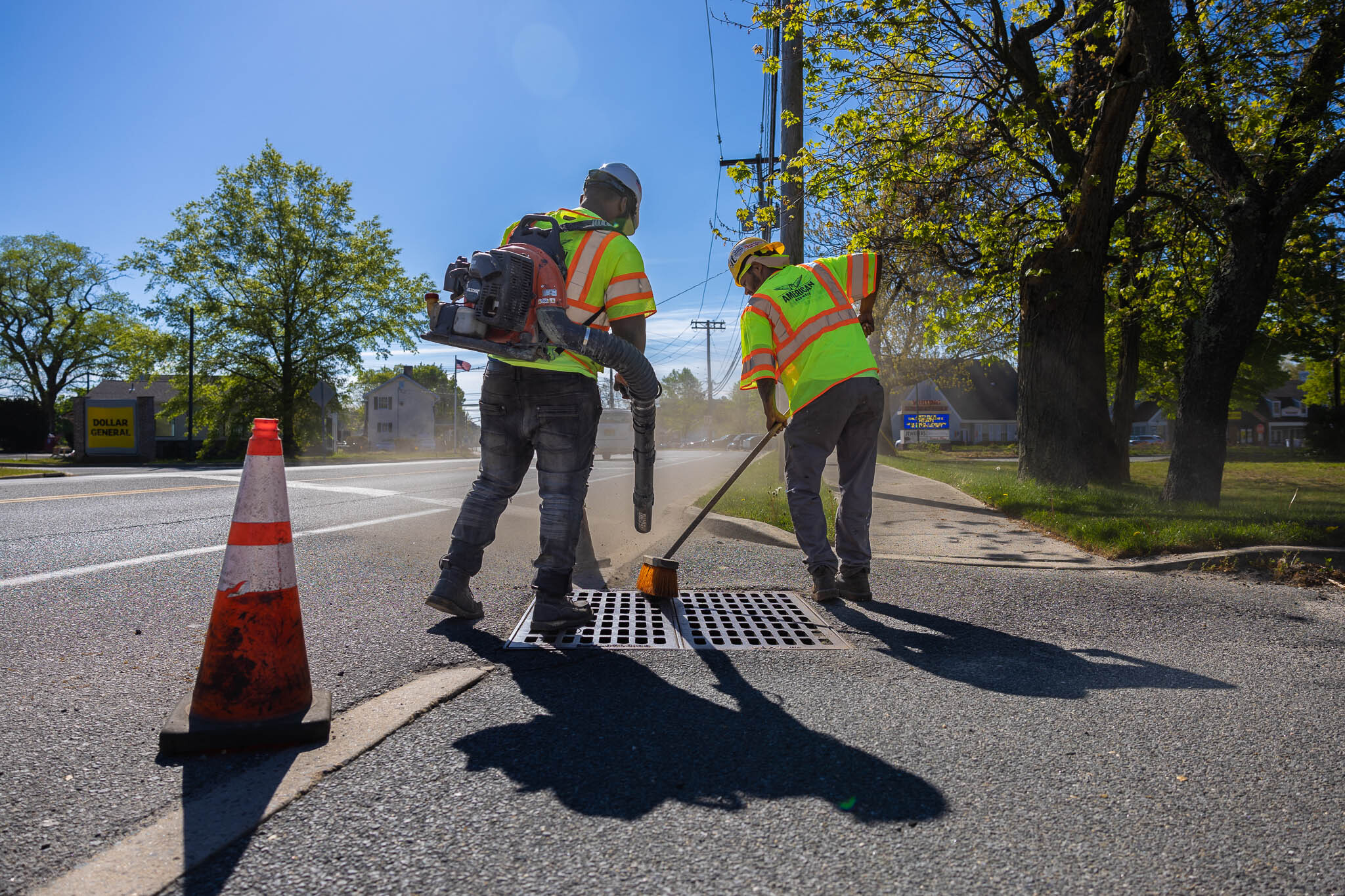
- Catch basins: Ideal for large lots, catch basins collect water and direct it through underground pipes to a storm drain, retention pond, or runoff point.
A customized drainage solution performed by Earle American may use one or multiple of the above methods. Directing water away from your parking lot prevents it from seeping into cracks and undermining the asphalt foundation. As a result, your parking lot will last longer, remain safer, and require fewer costly repairs over time.
FAQs about Parking Lot Drainage
What are the signs of parking lot drainage problems?
Signs of parking lot drainage problems include standing water after rainfall, alligator cracks, worsening potholes, potholes that recur in the same location, and low patches of pavement.
How do catch basins and inlets affect pavement performance?
Catch basins and inlets work by capturing water underneath your pavement. The water is directed through underground pipes toward a storm drain or retention pond.
When should drainage repairs be completed before paving?
Drainage repairs should be prioritized if you notice signs of poor parking lot drainage or if your drainage system is visibly damaged or misaligned. Improved drainage will help your pavement repairs last longer.
Upgrade Your Parking Lot’s Drainage with Earle American
Professional parking lot repairs offer long-term advantages, such as a longer-lasting asphalt surface, fewer unexpected repairs, and greater peace of mind. Earle American specializes in protecting commercial parking lots with tailored repair and drainage solutions. With offices in Camden County and Passaic County, NJ, we serve all of New Jersey, southern New York State, southeastern PA, and northern Delaware. Contact us today to learn more about our parking lot drainage solutions.
interested in asphalt paving?
get in touch with us
Are you looking for asphalt paving for your commercial property or industrial properties? Fill out the following form and we'll get back to you as soon as possible.